

Why it exists
A credit score only means something if a defaulter cannot walk away and open a fresh account. So Matocard binds one identity to one account, permanently, in the contract.The flow
- The webhook is checked with an HMAC signature over the raw body and must be less than 5 minutes old.
- The webhook only says approved; the backend fetches the decision from Didit itself for the document.
- The identity hash is an HMAC, keyed with a server secret, over the document’s issuing country, type and number, normalised. The key means nobody can brute-force a hash back into a document number.
- If the hash is already bound to another account, the result is duplicate, both in the database and, as a backstop, in the contract.
- Once
setVerifiedis confirmed onchain, the account receives a one-time MON drip for network fees.
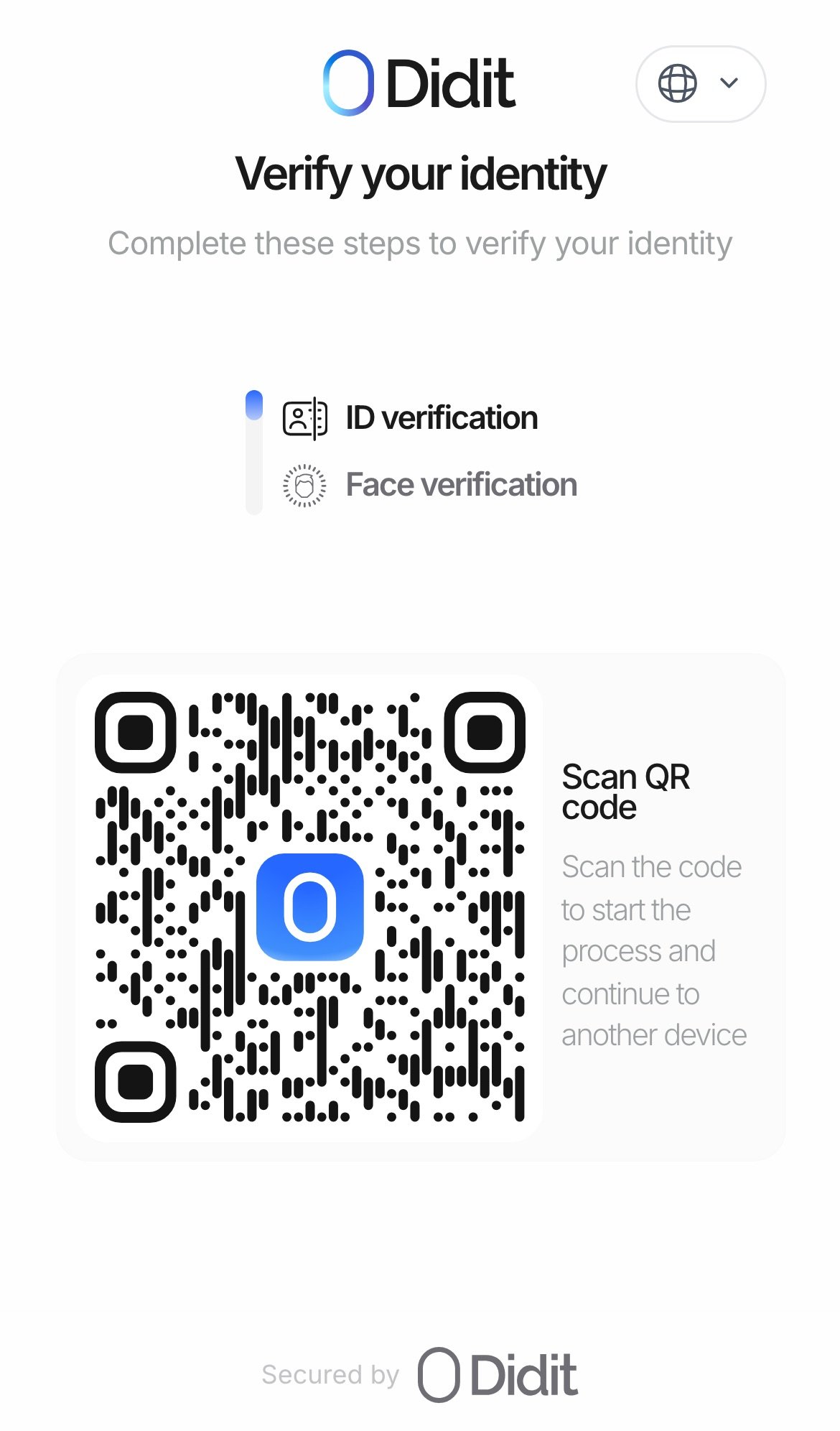
Didit's verification page opened from Matocard: ID document, then a selfie. On a computer it shows a QR code to continue on a phone.
What is stored where
No name, document number or photo is ever written onchain or shown on the public record.
The source of truth
The app and the API gate top-ups and sends on the contract’sisVerified, not on the database row. Accounts verified onchain by other means count; a database row alone does not.
Limits of this design
- The bound is permanent: no unbinding, no rebinding. A lost passkey today means a lost account; a timelocked recovery that rebinds a verified identity is on the roadmap.
- Matocard and Didit are trusted to verify honestly. See Trust model.